

PORTS & MARITIME SUSTAINABILITY SERVICES
Understand your environmental impacts, prioritise emissions reductions and build a practical sustainability strategy for your port operations.
Our scientists support port authorities, terminal operators and maritime organisations with carbon assessments, decarbonisation planning and wider environmental sustainability support across nature, water, supply chains and climate risk and resilience.
HOW TUNLEY SUPPORTS PORTS & MARITIME ORGANISATIONS
Our science-based assessments and consultancy help you understand your environmental impacts and make informed decisions across operations, equipment, infrastructure and supply chains.
Our services include:


Turn environmental data into ongoing, tangible progress
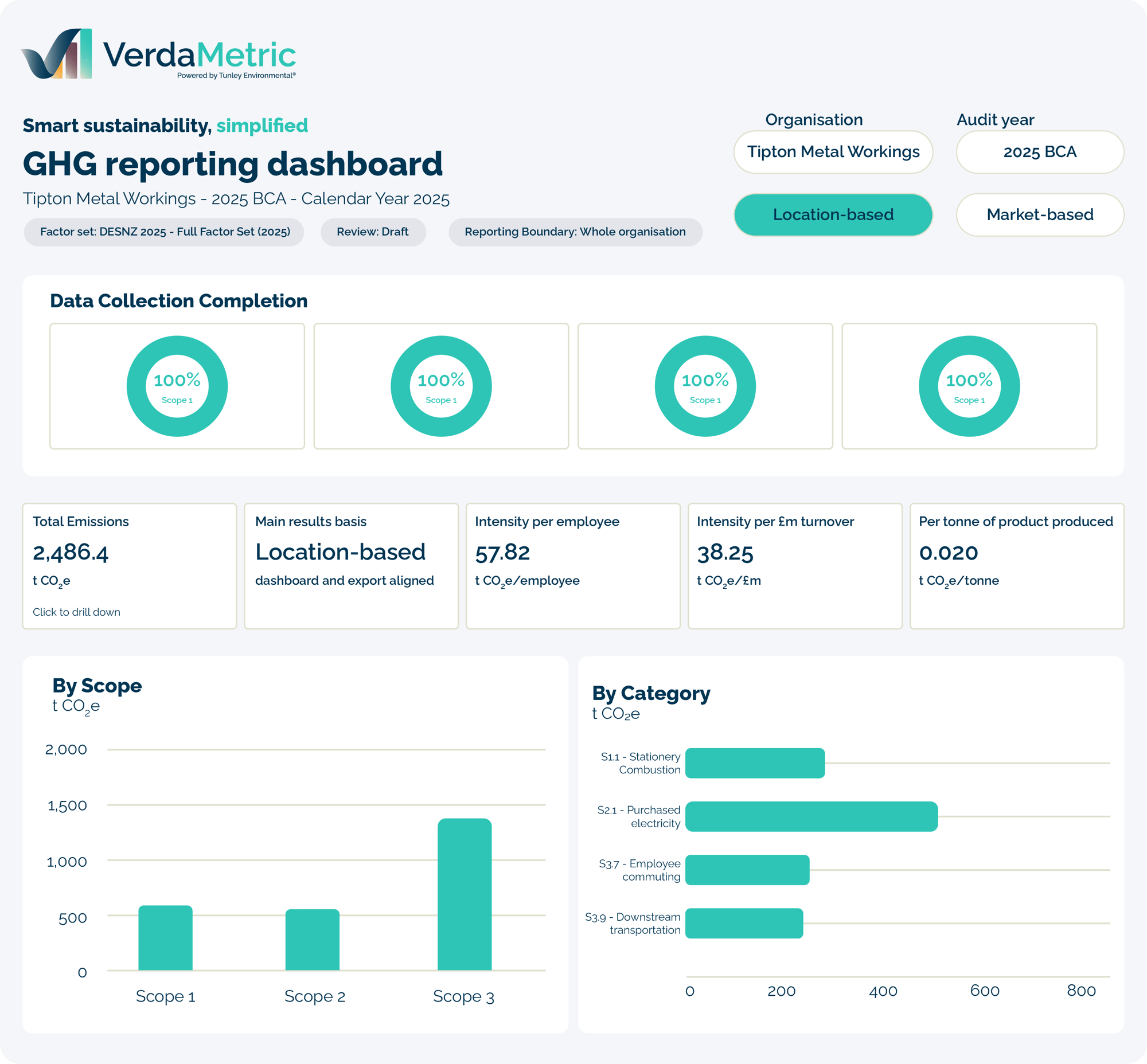
MANAGE YOUR SUSTAINABILITY DATA WITH VERDAMETRIC
Keeping environmental data organised can become increasingly complex when information comes from different sites, teams and reporting periods.
VerdaMetric is Tunley Environmental's sustainability management software, bringing carbon data, emissions calculations, performance monitoring, reporting and reduction planning into one platform.
Use it to maintain your organisation's carbon information throughout the year, monitor progress and inform your next steps.

CASE STUDY
Supporting the Port of Detroit's Decarbonisation Planning
Tunley Environmental worked with the Detroit/Wayne County Port Authority to assess emissions across port activities and develop a decarbonisation and air quality improvement plan.
The project involved engagement with terminal operators and other stakeholders to build an emissions baseline, identify major sources and establish reduction priorities. The resulting plan set out actions to support the port's ambition to reach net zero by 2040.
Explore how a coordinated assessment helped turn data from multiple operators into a shared plan for progress.
WHY CHOOSE TUNLEY?
Port sustainability requires reliable evidence and an understanding of how different activities, operations and investment decisions connect.
Our PhD-level scientists work alongside your team to turn complex environmental information into clear findings and practical recommendations. Drawing on experience including the Port of Detroit decarbonisation project, we tailor our support to your organisation's operations, available data and priorities.


A project scope that reflects your organisational boundaries, stakeholders and sustainability objectives.

Expertise across carbon, nature, water, products, supply chains and climate risk and resilience to support your wider strategy.

Recommendations that help your team prioritise action and understand what information or engagement is needed next.
OUR TEAM
Our scientists bring expertise across carbon accounting, life cycle assessment, nature, water and environmental sustainability strategy.
We work with your operational teams and stakeholders to understand the available data, explain assessment findings and support informed decisions. Whether you need a focused assessment or ongoing support, we help you build a clear picture of your impacts and priorities.








PORT SUSTAINABILITY SERVICES
 SUPPLY CHAIN BIODIVERSITY FOOTPRINT
Through quantifying your company's supply chain impact on biodiversity, we empower you to make informed decisions and take responsible action towards preserving and enhancing the natural environment.
View In Full Detail CARBON REDUCTION ASSESSMENT
Our carbon reduction assessments provide a comprehensive review of your ports carbon emissions and offer practical solutions to help you reduce your environmental impact, cut costs, and ultimately reach net zero.
View In Full Detail EMBODIED CARBON ASSESSMENT
Discover the true environmental impact of your port equipment with our comprehensive assessment that quantifies the total greenhouse gases released during its production.
View In Full Detail
LIFE CYCLE CARBON ASSESSMENT
Discover the power of our extensive assessments that adhere to global standards, delivering precise carbon footprints for your port equipment.
View In Full Detail PORT DECARBONISATION
Our services are designed to help ports worldwide meet their net zero aspirations. Whether you need funding for port decarbonisation or guidance on meeting sustainability goals, we are here to support you every step of the way.
View In Full Detail
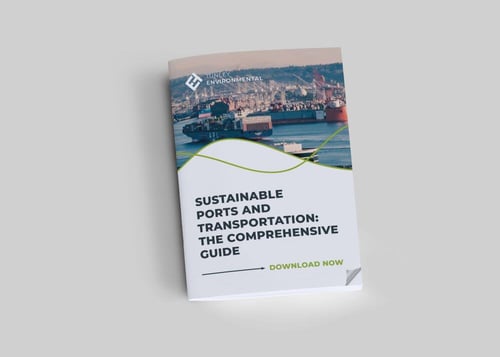
YOUR GUIDE TO MORE SUSTAINABLE PORT OPERATIONS
Explore the main sources of carbon emissions within ports, potential reduction measures and the steps involved in developing a port decarbonisation plan.
Our guide covers:
-
Key sources of emissions across port activities
-
Options for reducing emissions from equipment and operations
-
Steps for establishing a baseline and planning reductions
-
The role of collaboration in progressing towards net zero.