


| Quick Navigation Points Throughout The Blog | |
| 1. How Does a Life Cycle Assessment Work? | 2. What are the Benefits of a Life Cycle Assessment? |
| 3. Where are Life Cycle Assessments Applied? | 4. A Real-world Life Cycle Assessment Example |
How Does a Life Cycle Assessment Work?
A Life Cycle Assessment (LCA) is a structured methodology used to evaluate the environmental impacts of a product, process, or service across its entire life cycle. Rather than focusing on a single stage, it takes a “cradle-to-grave” approach, from raw material extraction and manufacturing through to use and end-of-life.
An LCA typically follows four key stages:
- Goal and scope definition – outlining what is being assessed, the purpose of the study, and the system boundaries
- Life cycle inventory (LCI) – collecting data on energy use, material inputs, emissions, and waste across each stage
- Life cycle impact assessment (LCIA) – translating this data into environmental impact categories such as climate change, resource depletion, and water use
- Interpretation – analysing the results to identify environmental hotspots and opportunities for improvement
If you’d like a more detailed breakdown of each phase, you can explore our guide to life cycle assessment stages.
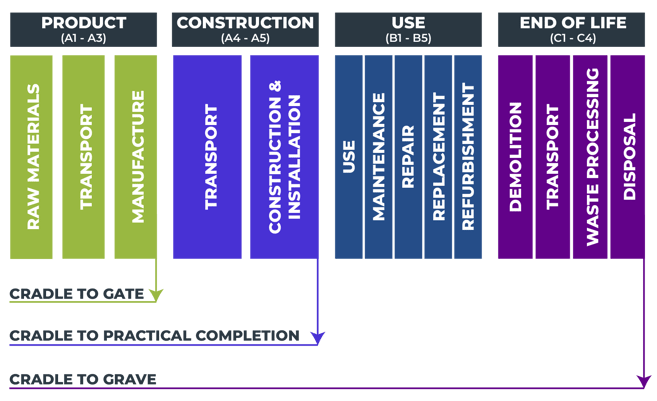 Image: The stages of a Life Cycle Assessment
By following this structured approach, organisations can build a clear picture of where the most significant environmental impacts occur. This makes it easier to prioritise actions, whether that’s reducing emissions, improving material efficiency, or redesigning products.
In many cases, LCAs also form the foundation for related assessments, such as product carbon footprints, which focus specifically on greenhouse gas emissions across the life cycle.
What are the Benefits of a Life Cycle Assessment (LCA)?
1. Environmental Impact Assessment
2. Resource Efficiency and Waste Reduction:
3. Sustainable Product Design
4. Supply Chain Optimisation
5. Corporate Social Responsibility
6. Regulatory Compliance and Risk Management
Where Are Life Cycle Assessments Applied?
Life Cycle Assessments are used across a wide range of industries to support more sustainable decision-making and improve environmental performance.
For example, LCAs are commonly applied in manufacturing to identify opportunities to reduce emissions and resource use across production processes. In sectors such as food production, they can help assess the environmental impact of ingredients, packaging, and distribution. LCAs are also widely used in the development of medical devices and in analysing emerging technologies such as electric vehicles, where understanding full life cycle impacts is essential.
As sustainability expectations continue to grow, more organisations are using LCAs not only to improve internal processes but also to support external reporting, compliance, and product transparency.
A Real-World Life Cycle Assessment Example
PECO Pallet, a North American leader in pooled pallet solutions, is known for its signature 9-block red pallets made from sustainably sourced lumber. As part of their commitment to sustainability, PECO set a goal to complete a verified greenhouse gas inventory and establish a 2023 baseline before setting reduction targets. They also wanted to conduct a life cycle assessment of their pallets to better understand their environmental impact, and partnered with Tunley Environmental to achieve these objectives. Watch how we worked with PECO Pallet and what the outcome results were from the LCA assessment. Tunley Environmental also works with PECO Pallet on an ongoing support retainer package, learn more about our flexible sustainability packages to see how Tunley can help your organisation.
"Tunley’s guidance was invaluable across the entire project, from data collection, measurement, reporting and final verification. The team went above and beyond, supporting with updates to their sustainability report, addressing EcoVadis questions, and responding to customer requests."
Katie Bishop | ESG Manager at PECO Pallet
The Bottom Line
To conclude on the benefits of a Life Cycle Assessment, it is a powerful analysis that provides organisations with a comprehensive understanding of the environmental impact of their products or processes. By considering the entire life cycle, from raw material extraction to disposal, an LCA enables businesses to identify opportunities for improvement, optimise resource efficiency, reduce waste, and make informed decisions regarding product design and supply chain management. Embracing an LCA not only contributes to a more sustainable future but also enhances a company's reputation, compliance, and overall competitiveness in a world increasingly focused on environmental responsibility.