

Science-based expertise

Why Green Claims Are Under Increasing Scrutiny
Businesses increasingly use environmental messaging to communicate sustainability commitments, but the difference between green marketing and greenwashing is now under intense regulatory and commercial scrutiny.
Under frameworks such as UK Green Claims Code (CMA/ASA guidance), environmental claims must be clear, accurate and substantiated. Misleading or unverified claim can result in regulatory action, reputational damage and loss of consumer trust.
This scrutiny is increasing as sustainability becomes a core decision-making factor for consumers, investors and procurement teams. Businesses are no longer judged on intention alone, but on evidence, transparency and measurable environmental performance.
This article explores the difference between green marketing and greenwashing, with the goal of equipping readers with the knowledge to distinguish between the two.
|
Quick navigation points throughout the blog
|
|
|
|
|
What is Green Marketing?
Green Marketing (or sustainability marketing) refers to the promotion of products, services or business practices that are demonstrably environmentally responsible.
However, effective green marketing is no longer based on messaging along, it must be grounded in verified environmental data.
Characteristics of credible green marketing:
-
Evidence-based environmental claims supported by data
-
Use of lifecycle thinking (e.g. carbon footprint or LCA studies)
-
Clear definitions of scope (what is and isn't included)
-
Alignment with recognised standards (ISO, PAS or equivalent frameworks)
-
Transparent communication of environmental impact
Increasingly, organisations rely on assessments such as carbon footprint assessments and life cycle assessments (LCA) to ensure claims are scientifically defensible.
How Green Marketing Affects Businesses and Consumers
To use green marketing effectively, businesses should have finished a carbon assessment for their company and/or their products to find out how much carbon is produced. By completing this process and marketing according to the Green Claims Code, businesses can ensure compliance.
Business Benefits:
-
Strengthen brand trust and credibility
-
Improved eligibility for public procurement frameworks (e.g. PPN 006, ISO 14068 and other sustainability requirements)
-
Competitive advantage in ESG-driven markets
-
Better alignment with sustainability reporting frameworks (CSRD)
Consumer Benefits:
- Improve transparency in purchasing decisions
- Reduced risk of misleading environmental claims
- Ability to compare products based on measurable environmental performance
Importantly, credible green marketing depends on accurate carbon and environmental data, ensuring claims are verifiable rather than promotional.
Learn More: The Power of Storytelling in Green Marketing
What is Greenwashing?
Greenwashing is the practice of making environmental claims that are misleading, unsubstantiated or exaggerated.
The UK CMA defines it as claims that may give consumers a false impression of a product or organisation's environmental impact.
Common examples include:
-
Vague claims such as "eco-friendly" or "green" without evidence
-
Highlighting one sustainable attribute while ignoring wider impacts
-
Using environmental imagery without supporting data
-
Claiming carbon neutrality without transparent methodology or verification
-
Omitting lifecycle impacts (e.g. production or supply chain emissions)
Learn More: What is Greenwashing? How to Spot it and Avoid it
Types of Greenwashing Businesses Should Avoid
To support compliance and clarity, greenwashing typically falls into several categories:
Vagueness: broad or undefined environmental claims
Hidden trade-offs: focusing on one benefit while ignoring larger impacts
No proof claims: environmental statements without data or verification
Irrelevant claims: highlighting attributes that are legally required or insignificant
Misleading visuals or branding: implying sustainability without evidence
Understanding these categories is essential for aligning with the Green Claims Code and advertising standards.
How Greenwashing Affects Businesses and Consumers
The impact of greenwashing extends beyond consumer misunderstanding.
Business risks include:
-
Regulatory investigation under UK consumer protection law
-
Advertising bans or enforcement action from regulators
-
Loss of consumer trust and brand credibility
-
Exclusion from procurement or supply chain opportunities
- Increased ESG scrutiny from investors and stakeholders
Learn More: Tips to Avoid Greenwashing in Sustainability Reporting
Green Marketing vs Greenwashing: Key Differences
The distinction between green marketing and greenwashing lies in evidence, transparency and verification.
| Green Marketing | Greenwashing |
| Based on verified environmental data | Based on vague or unverified claims |
| Uses lifecycle or carbon assessment | Ignores full environmental impact |
| Transparent methodologies and scope | Selective or incomplete disclosure |
| Aligned with ISO and regulatory standards | Non-compliant or unsupported claims |
| Independently verifiable | Cannot be substantiated |
A useful rule is simple: If it cannot be measured or verified, it should not be marketed as an environmental benefit.
To effectively distinguish green marketing from greenwashing, it is crucial to scrutinise the following key areas:
-
Claims and Certifications
Organisations should ensure their environmental claims comply with established guidelines such as the Green Claims Code, which mandates that claims be clear, accurate and substantiated. Verification using a reputable third-part organisation that aligns with sustainability standards such as the United Nations Sustainable Development Goals can also validate claims. This helps in building consumer trust and ensuring that the green credentials promoted are not only transparent but also backed by credible evidence.
-
Company Practices
Consumers and stakeholders should research beyond the claims. It involves examining whether a company’s practices align with their advertised green credentials. Transparency in the company's supply chain, adherence to sustainable production methods and the overall environmental impact of their products are critical areas to investigate.
-
Transparency
Transparency is paramount in distinguishing genuine green efforts from greenwashing. Companies should provide clear, accessible information that supports their environmental claims and is backed by verifiable data. This includes detailed reports, links to sustainability certifications and evidence of compliance with environmental standards.
Learn More: Green Marketing vs Greenwashing: How to Spot the Difference
How to Identify Greenwashing (Consumer and Business Checklist)
To assess whether an environmental claim is credible, evaluate the following:
1. Claims and Evidence
-
Is the claim supported by measurable data?
- Is a methodology clearly defined?
2. Scope and Transparency
- Does the claim consider full lifecycle impacts?
- Are system boundaries clearly stated?
3. Verification
- Has the claim been independently verified or assured?
- Is it aligned with recognised standards such as ISO 14040/44?
4. Clarity of Communication
- Is the language specific and measurable?
- Are vague terms avoided?
If any of these elements are missing, the claim may present a greenwashing risk.
Tunley Environmental's Green Claims Code Guide
By adhering to this guide, not only will you comply with regulatory requirements, but you will also build trust with your customers and make meaningful contributions towards a sustainable future.
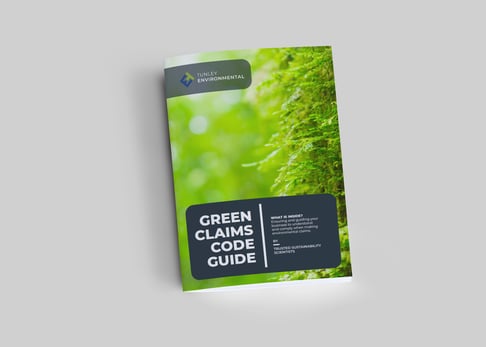
In this guide, you will learn:
-
The importance of accurate, transparent, and trustworthy environmental marketing claims.
-
How businesses can ensure their claims are truthful, clear, substantiated, and consider the full life cycle impact of products.
-
The link between Carbon Assessments and Green Claims.
-
Examples of non-compliant and compliant green claim statements.
-
Global regulations for greenwashing, including rules from EU, UK, US, Hong Kong, China, India, and more.
Why Credible Green Marketing Matters
As sustainability becomes central o business strategy, organisations must ensure that environmental claims are not only persuasive but also verifiable, transparent and scientifically grounded.
Green Marketing built on robust data enhances credibility and competitive advantage. Greenwashing, by contrast, introduces regulatory risk, reputational damage and commercial uncertainty.
Tunley can support businesses sustainability efforts with our Green Marketing Support. This service is designed to show organisation's carbon reduction efforts through effective marketing strategies while avoiding greenwashing.