

A sustainability maturity model helps an organisation understand how well sustainability is integrated into its strategy, processes and performance monitoring. It provides a structured way to identify established strengths, areas that require further attention and the initiatives that could create the greatest improvement.
This is particularly useful when sustainability activity has developed unevenly. An organisation may measure its carbon emissions but have limited oversight of water use, circularity or nature. Another may have strong environmental policies without clear ownership, targets or performance data.
A maturity assessment brings these connected subjects into one review. The result can help leadership, sustainability teams and operational departments establish where the organisation stands and where its time and resources should be focused next.
| Quick navigation points throughout | |
| 1. What is a sustainability maturity model? | |
What Is a Sustainability Maturity Model?
A sustainability maturity model assesses an organisation against defined environmental themes and indicators, giving you a score for each at the end of it. Rather than providing a simple pass or fail result, it considers the extent to which sustainability has been established, implemented, measured and improved.
Research into organisational sustainability maturity models shows that their terminology and structure vary. However, they commonly describe progression from reactive or informal activity towards greater formalisation, integration, measurement and continual improvement (Tran and Verlhiac, 2026).
This approach recognises that organisations begin from different positions. Priorities will depend on factors such as sector, size, operating locations, supply chain, environmental impacts and regulatory exposure. A smaller organisation beginning to gather environmental data will require different next steps from an established business with formal targets and reporting processes.
A sustainability maturity assessment therefore provides a starting point. It helps an organisation understand its current position before committing resources to further policies, targets, data systems or environmental initiatives.
Why Should a Sustainability Maturity Model Cover Multiple Areas?
Sustainability is frequently thought of primarily as a carbon issue. Greenhouse gas emissions are important, but an organisation’s environmental responsibilities can also involve materials, waste, water, nature, compliance and the way sustainability is governed.
Assessing several themes together makes it easier to see where progress is uneven and where environmental issues interact. Tunley Environmental’s sustainability maturity assessment covers six areas:
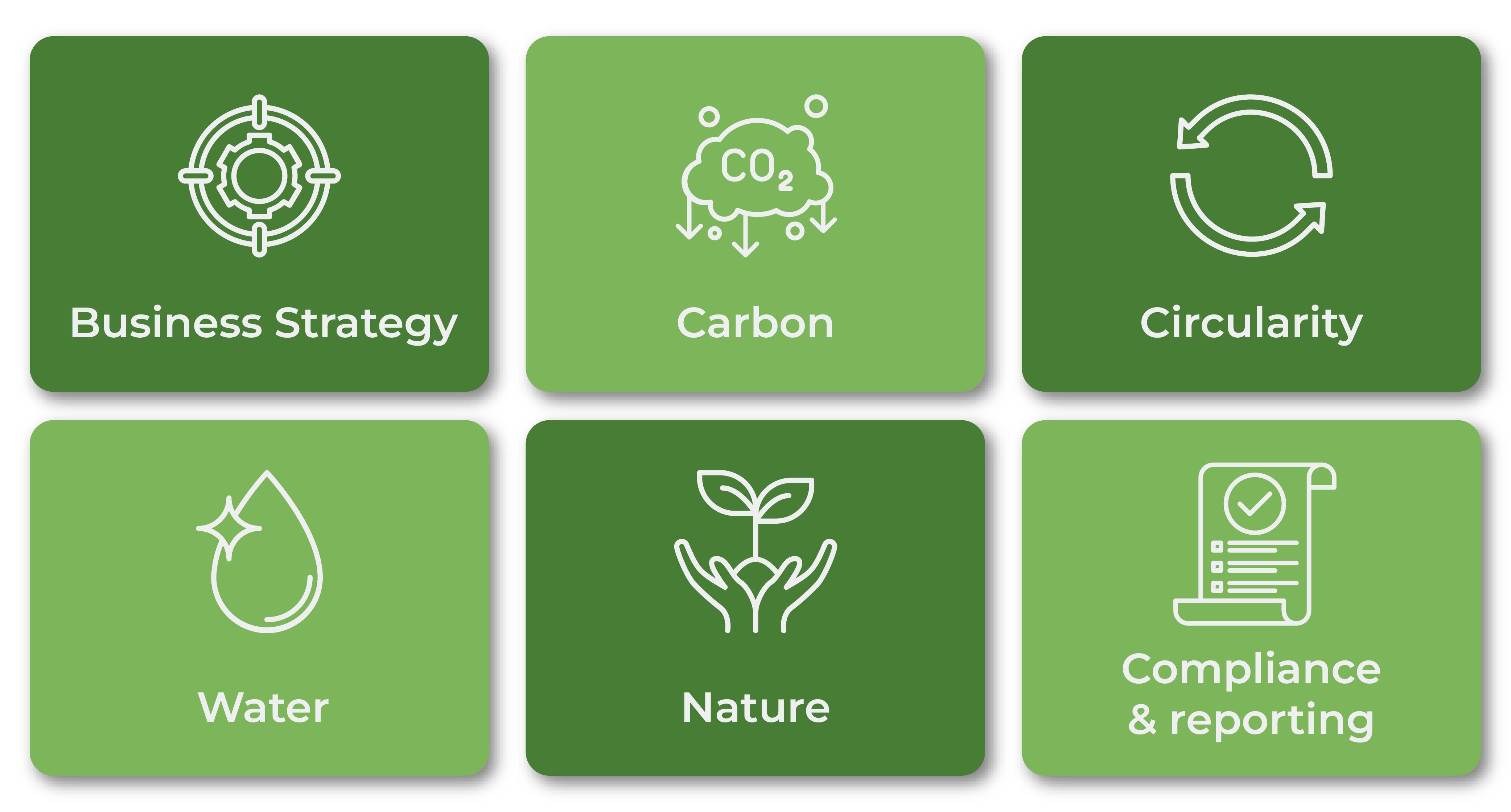
Business strategy
This examines whether sustainability is connected to organisational priorities, governance, responsibilities and business planning. It can reveal whether environmental commitments are supported by ownership, resources, targets and review processes.
Carbon
The carbon theme considers whether the organisation understands and manages its greenhouse gas emissions. The GHG Protocol Corporate Standard provides requirements and guidance for preparing a corporate greenhouse gas inventory, while the specific reporting expectations that apply will depend on the organisation and jurisdiction.
Circularity
Circularity concerns the way materials and products are designed, purchased, used, reused and recovered. ISO 59004:2024 provides principles and implementation guidance for organisations moving towards a circular economy.
Water
Water maturity extends beyond recording consumption. Depending on the organisation, it may include water quality, local catchment conditions, operational dependencies and supply chain exposure. The Alliance for Water Stewardship Standard and ISO 14046 provide a wider framework for understanding water use, impacts and performance.
Nature
Organisations can depend on nature while also affecting biodiversity through their operations and value chains. ISO 17298:2025 supports organisations in assessing biodiversity dependencies, impacts, risks and opportunities and incorporating them into strategy and operations.
Compliance and reporting
This area considers how an organisation identifies applicable requirements, manages evidence and prepares environmental information. UK reporting requirements vary by organisation; for example, the government’s environmental reporting guidance covers Streamlined Energy and Carbon Reporting, while UK SRS S1 and S2 were issued in February 2026 as sustainability disclosure standards (UK Government).
Looking across all six themes helps prevent progress in one area from concealing significant gaps elsewhere.
How Does a Sustainability Maturity Assessment Identify Priorities?
The assessment compares existing activity with the characteristics expected at different stages of maturity. Questions consider whether policies exist, how responsibilities are assigned, what data is collected, whether targets have been established and how performance is reviewed.
A personalised report can then show relative strengths and potential gaps. For example, an organisation may have calculated Scope 1 and Scope 2 emissions but lack a documented reduction plan. It may have waste reduction initiatives while procurement criteria still favour short product life cycles or difficult-to-recover materials.
These findings provide a basis for prioritisation. Useful questions include:
- Which gaps relate to significant environmental impacts or dependencies?
- Are any legal, customer or reporting requirements insufficiently addressed?
- Which improvements can be incorporated into existing business processes?
- Where is better data needed before targets can be established?
- Which departments have the authority and resources to implement the next steps?
- How will progress be measured and reviewed?
The highest score is not necessarily the immediate objective for every theme. Resources should reflect the organisation’s context, material impacts, obligations and strategic priorities.
Can the Assessment Be Used for a Sustainability Gap Analysis?
A maturity report can support an initial sustainability gap analysis by showing the difference between current activity and a more developed approach. It can help an organisation recognise missing policies, incomplete data, unclear ownership or environmental subjects that have received limited attention.
The report can also test whether a sustainability strategy is supported by implementation. A published commitment has limited operational value when there is no accountable owner, timetable, performance measure or review cycle behind it.
However, an initial assessment should not be seen as a substitute for a detailed technical study. Further work may be required to quantify emissions, assess site-specific water or biodiversity issues, review products and materials, or establish which regulatory requirements apply.
How Should an Organisation Use Its Assessment Results?
The findings should be translated into an improvement plan with priorities, ownership, timescales and measures of progress. Each item should be assigned to the department capable of implementing it, while the sustainability team can coordinate the overall strategy and provide technical guidance.
This may mean integrating environmental criteria into procurement, adding sustainability indicators to management reporting or incorporating environmental risks into existing risk registers. Product teams may need to review material choices, while facilities teams may be responsible for energy, water and waste initiatives.
Organisations should also recognise connections between themes. Reducing material use may lower waste and embodied carbon, while water management can influence local ecosystems and operational resilience. Viewing these relationships together can help avoid shifting an environmental burden from one area to another.
The assessment should then be revisited as the strategy develops. This reflects the continual improvement approach within ISO 14001:2026, which connects planning, implementation, monitoring and improvement within an environmental management system.
What Can a Sustainability Maturity Assessment Not Confirm?
A sustainability assessment of this kind provides an initial indication based on the answers supplied. It does not independently verify every policy, dataset or operational practice, and it does not confirm conformity with legislation, reporting rules or certification standards.
This distinction is important when communicating the results. A maturity score can guide internal discussion and further investigation, but legal compliance and technical performance may require a separate review supported by appropriate evidence and specialist expertise.
The Bottom Line
A sustainability maturity model gives organisations a structured view of how environmental sustainability is being managed across the business. By considering strategy, carbon, circularity, water, nature, and compliance and reporting together, it can reveal where established activity is working and where gaps may limit progress.
The value of the assessment comes from how its findings are used. Clear priorities, suitable ownership, proportionate resources and regular monitoring can turn an initial score into an implementable route for strengthening the organisation’s sustainability strategy.
Tunley Environmental’s free Sustainability Maturity Assessment takes approximately 10-15 minutes to complete. You will receive a personalised report within five working days, outlining your scores, strengths, potential gaps and recommended next steps, with the option to discuss the findings with a Tunley Environmental scientist.