


Climate risk assessment is the process of identifying, analysing and evaluating how climate change may affect an organisation’s operations, assets and long-term strategy. It helps businesses understand potential physical, transition and regulatory risks linked to climate change so they can develop effective resilience and adaptation strategies.
Over the last few decades, the world has increasingly recognised the devastating impact of climate change on the operational, financial and strategic well-being of organisations worldwide. According to the Intergovernmental Panel on Climate Change (IPCC), extreme weather events such as droughts, storms and heatwaves are becoming more frequent and intense due to rising global temperatures. These changes can affect infrastructure, productivity, ecosystems and public health across multiple sectors. For businesses preparing for climate change, the first step in understanding associated risks is to answer the question: what is climate risk assessment? Answering this question is the first step in identifying potential climate threats, evaluating vulnerabilities and developing effective mitigation strategies.
What Is Climate Risk Assessment?
Climate risk assessment refers to a structured process used to identify, analyse and evaluate the potential impacts of climate change on an organisation’s operations, assets and strategic objectives. These risks are not limited to environmental hazards alone, but also include economic, regulatory and reputational pressures that emerge as our society transitions toward a low-carbon, nature-positive future. Within a structured climate risk assessment, risks are typically grouped into three core categories.
Physical Climate Risks:
These relate to the direct impacts of climate change on infrastructure, operations and supply chains. Physical risks are becoming increasingly relevant for organisations whose assets or suppliers are exposed to changing weather patterns or climate extremes. Common examples include:
- Flooding that disrupts facilities or transport infrastructure
- Heat stress affecting workforce productivity and equipment performance
- Drought impacting water-intensive manufacturing processes
- Storm damage to buildings and logistics networks
- Sea-level rise threatening coastal infrastructure
These hazards can affect operational continuity, increase maintenance costs, and create long-term investment risks if facilities are located in climate-vulnerable areas. Assessing these exposures is therefore a central part of understanding what climate risk assessment involves.
Transition Climate Risks:
Transition risks arise from the global shift towards a low-carbon economy. As governments introduce climate policies and industries decarbonise, organisations may face financial and operational pressures associated with adapting to these changes. Examples of transition risks include:
- New environmental regulations and carbon pricing mechanisms. For instance, the EU’s Carbon Border Adjustment Mechanism (CBAM)
- Rapid changes in market demand for low-carbon products
- Technological innovation that disrupts existing business models
- Investor expectations for stronger climate governance and disclosure
For many businesses, particularly those operating in emissions-intensive sectors, these transition pressures can influence investment decisions, operational strategy and long-term competitiveness.
Reputational and Liability Risks:
In addition to physical and transition risks, organisations must also consider reputational and liability risks associated with climate change. Stakeholders increasingly expect businesses to demonstrate transparency and proactive climate management. These risks may arise from:
- Failure to disclose climate risks in sustainability or financial reporting
- Misalignment with investor or stakeholder expectations
- Perceived inaction on climate adaptation and resilience
- Legal challenges linked to climate-related impacts or environmental harm
As climate disclosure frameworks expand and public scrutiny increases, reputational risks can directly influence brand value, investor confidence and regulatory compliance.
Understanding these interconnected risks helps organisations build a comprehensive climate resilience strategy that supports long-term corporate climate resilience.
Is There a Framework for Assessing Climate Risk?
The simple answer is: Yes. While organisations may vary in their approach to understanding risks from climate change, in practice, most climate risk assessments follow a structured methodology used by governments, research organisations and sustainability practitioners.
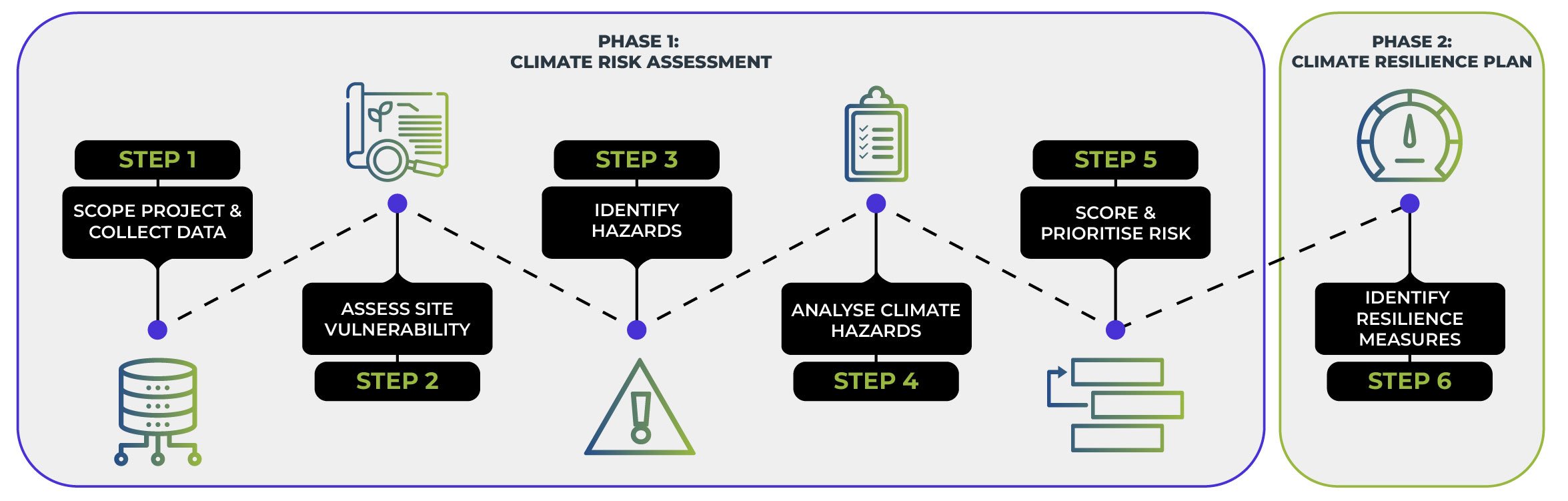
Typical steps include:
- Step 1: Define scope and objectives: Organisations identify the assets, sites, and operations that will be analysed.
- Step 2: Identify climate hazards: Climate projections and environmental data are used to determine which hazards are most relevant.
- Step 3: Assess exposure: This stage evaluates whether assets or operations are located in areas vulnerable to climate hazards.
- Step 4: Evaluate vulnerability: Organisations assess how sensitive their operations are to these hazards.
- Step 5: Prioritise risks: Risks are ranked based on likelihood and potential impact.
This structured approach helps organisations answer the question: what is climate risk assessment in practical terms by translating climate data into actionable business insights.
Building Resilience Against Climate Risk Through Structured Planning
Conducting a climate risk assessment is only the first step. The ultimate goal is to translate risk insights into practical strategies that strengthen climate resilience across operations and supply chains. Structured planning enables organisations to develop a comprehensive climate resilience plan that reduces vulnerabilities and prepares businesses for future climate conditions.
Examples of resilience actions may include:
- Upgrading infrastructure to withstand extreme weather
- Diversifying suppliers to reduce supply chain disruption
- Improving water management systems
- Strengthening emergency preparedness protocols
Integrating these actions into organisational strategy helps businesses develop a robust climate resilience plan that supports long-term operational stability. Organisations are beginning to plan ahead by embedding climate resilience into enterprise risk management and sustainability planning, ensuring climate risks are considered alongside financial and operational risks.
The Bottom Line
In answering the question, what is climate risk assessment, organisations gain a clearer understanding of how climate change can affect their operations, infrastructure and long-term strategy. A structured climate risk assessment enables businesses to identify potential hazards, understand site vulnerabilities and prioritise the risks that pose the greatest threat to operational continuity and financial performance. Developing a proactive approach to climate impact helps businesses strengthen climate resilience, develop an effective climate resilience plan and build long-term corporate climate resilience across their operations and supply chains. This is what Tunley Environmental’s climate risk assessment service is designed to deliver, providing organisations with a structured approach to identifying climate-related hazards, assessing operational vulnerabilities and developing practical strategies.