

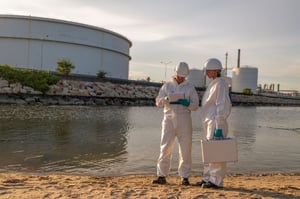
Water is one of the most critical resources in our world, having a massive impact on everything from global economies to industrial production and national wellbeing. According to the World Economic Forum, water crises consistently rank among the top global risks by impact, with climate change, industrial demand and population growth placing unprecedented pressure on freshwater systems. Industrial sectors such as manufacturing, construction, mining and infrastructure development are particularly exposed to these pressures because their operations rely heavily on water for production processes, cooling systems and raw material extraction.
Understanding Water Risk in Corporate Sustainability
Water risk refers to the potential effects on operations, finances, regulations, and reputation that arise from water-related challenges in a business. These risks typically fall into three main categories:
Physical Risks: These relate to the availability and quality of water resources. Many companies operate in regions already experiencing water stress or declining freshwater availability. When droughts occur or groundwater reserves become depleted, production processes that rely on large volumes of water can be interrupted. Pollution from industrial discharge, agricultural runoff and urban development can also degrade water sources, making them unsuitable for industrial use without additional treatment. In extreme cases, water shortages may even compel companies to curtail or cease their operations.
Regulatory Risks: Governments around the world are strengthening water management policies, discharge regulations and environmental reporting requirements. Failure to comply with these policies can result in:
-
Fines and legal penalties
-
Operational restrictions
-
Increased reporting obligations
-
Reputational Risks
In addition to these direct risks, organisations are increasingly exposed to reputational pressures. Stakeholders are paying closer attention to how companies manage environmental resources. Businesses perceived to be contributing to water scarcity or pollution can face investor scrutiny, public criticism and even loss of contracts within sustainability-focused supply chains. Because of these factors, many companies are now integrating water risk management into their broader sustainability and ESG strategies.
The Role of the UN Sustainable Development Goals in Managing Water Risk
The United Nations Sustainable Development Goals provide a globally recognised framework for tackling the world’s most pressing environmental and social challenges. One of the most effective ways organisations can structure their water management efforts is by aligning their strategy with the UN SDGs, particularly UN SDG 6: Clean Water and Sanitation.
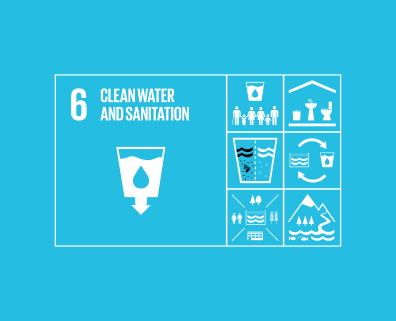 Image credit: UN SDGs
For businesses, aligning with SDG 6 provides several advantages:
-
A structured framework for water management
-
Alignment with investor and regulatory expectations
-
Improved ESG reporting credibility
-
Greater supply chain transparency
Although many organisations recognise the importance of the SDGs, translating global sustainability goals into practical business strategies can be challenging. Tunley’s UN SDG Implementation Roadmap provides organisations with a structured approach to aligning their sustainability initiatives with the United Nations Sustainable Development Goals.
Key Areas of Water Risk Management Within the SDG Framework
To effectively manage water risk using the SDG framework, organisations should focus on four critical areas. These areas align closely with the targets under UN SDG 6.
Improving Water Quality and Reducing Pollution
One of the most significant challenges for global water systems is water contamination caused by industrial discharge, chemicals and waste. A key central objective of UN SDG 6 is improving water quality by reducing pollution and minimising the release of hazardous chemicals into waterways.
Organisations can support these goals by implementing practices such as:
-
Advanced wastewater treatment systems
-
Improved chemical management
-
Monitoring of discharge levels
-
Closed-loop water recycling processes
Improving water quality requires organisations to adopt stronger environmental management practices. This includes investing in advanced wastewater treatment systems, improving chemical handling procedures and monitoring discharge levels to ensure compliance with environmental regulations. In addition to preventing pollution, many companies are exploring opportunities to increase water recycling and safe reuse. Closed-loop water systems, for example, allow businesses to treat and reuse water within their operations rather than continuously withdrawing new freshwater resources.
Increasing Water-Use Efficiency Across Operations
Another major priority within SDG 6 is improving water-use efficiency across all sectors. In many industries, water is used in large volumes for processes such as cooling, cleaning, manufacturing and raw material processing. Without effective monitoring and management, these processes can lead to inefficient water use and unnecessary withdrawals from local water sources.
Improving water-use efficiency involves measures such as:
-
Monitoring water consumption
-
Identifying water-intensive processes
-
Implementing water recycling systems
-
Optimising production processes
Even relatively small improvements in efficiency can significantly reduce water consumption when implemented across large industrial operations.
Implementing Integrated Water Resources Management
Water systems are interconnected across ecosystems, communities and industries. Because of this interconnected nature, the SDG framework emphasises the importance of Integrated Water Resources Management (IWRM). This approach recognises that sustainable water management requires coordination across sectors, geographic boundaries and stakeholder groups. This approach focuses on:
-
Coordinating water use across sectors
-
Managing water at watershed or basin levels
-
Collaborating with governments and communities
-
Supporting cross-border water governance where necessary
Instead of focusing solely on operational water use, companies should consider how their activities interact with surrounding communities, ecosystems, and other industries that depend on the same water resources. In many cases, effective water management also requires collaboration with governments, regulators, and local stakeholders. This is particularly important in regions where water systems cross national or regional boundaries.
Protecting Water-Related Ecosystems
Healthy ecosystems play a vital role in maintaining water availability and quality. Rivers, wetlands, lakes and aquifers naturally filter pollutants, regulate water flows and support biodiversity. When ecosystems become degraded, water systems can become less resilient, leading to increased flood risks, declining water quality and reduced freshwater availability. Businesses can contribute to ecosystem protection by:
-
Supporting wetland restoration
-
Reducing watershed pollution
-
Protecting biodiversity around operational sites
-
Partnering with conservation initiatives
These actions also contribute to broader sustainability goals beyond water, including climate mitigation and biodiversity protection.
How a Water Footprint Assessment (WFA) Supports Water Risk Management
One of the most practical tools for managing water risk is conducting a water footprint assessment. A water footprint assessment measures how much water an organisation uses across its operations and supply chains. It also identifies where water consumption creates the greatest environmental impact or operational risk. This type of analysis allows sustainability teams to understand how water flows through their processes, where inefficiencies exist and which locations may be exposed to water stress.
Learn More: Company Water Footprint Assessment | Tunley Environmental

The Bottom Line
Understanding and managing water risk requires technical expertise, robust data and a structured sustainability strategy. By aligning water footprint assessments with frameworks such as the UN Sustainable Development Goals, businesses can ensure their water management strategies contribute to both operational resilience and global sustainability targets. At Tunley Environmental, we support organisations through water footprint assessments that identify water risks across operations and supply chains. These assessments help organisations understand their water use, identify inefficiencies and implement strategies that improve water efficiency and reduce environmental impact.