

The UK government has confirmed the introduction of a Carbon Border Adjustment Mechanism (CBAM) as part of its Autumn Budget 2024 presented by Chancellor Rachel Reeves to Parliament. This brings the UK closer in aligning with European efforts to decarbonise and support domestic industries transitioning to Net Zero. CBAM is a significant regulatory development that targets imported goods in high-emissions industries, ensuring they meet similar carbon pricing standards as domestic products which fall under the UK Emissions Trading Scheme (UK ETS).
| Quick Navigation Points Throughout The Blog | |
| 1. What is the UK CBAM? | 2. Key Takeaways |
| 3. UK CBAM vs EU CBAM | 4. UK CBAM and EU CBAM Consultation |
What Is the UK CBAM?
Carbon leakage occurs when businesses transfer production to countries with less stringent environmental regulations to avoid the costs associated with climate policies, such as carbon pricing. This shift undermines the effectiveness of emissions reduction strategies and can increase global emissions, as production in less regulated regions often results in higher carbon outputs. CBAM is designed to address this challenge by imposing a carbon cost on imports of goods from high-emission sectors. It ensures that imported products bear a similar carbon price to that of domestically produced goods, discouraging the relocation of industries to regions with weaker climate policies.
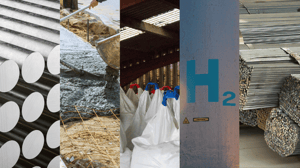
The UK CBAM will impose a liability on importers of goods such as aluminium, cement, fertilisers, hydrogen, iron and steel—industries with substantial carbon footprints. This liability will reflect the difference between the UK’s carbon price (UK ETS) and that of the exporting country, covering both direct and indirect emissions embodied in these products. Unlike the EU's CBAM, which is already being implemented as part of the EU Green Deal, the UK's CBAM notably excludes electricity. There is potential for broader coverage compared to the EU CBAM, as it has been stated that products from the glass and ceramic sectors will be assessed for possible inclusion in the UK CBAM in the future.
Related Insight: all you need to know CBAM
Key Takeaways
Provisions included in the Finance Bill 2024-25 will empower HMRC and the UK ETS Authority to prepare for its implementation, leveraging insights gathered during the March 2024 CBAM consultation.
- Industries Covered: Aluminium, cement, fertilisers, hydrogen and iron & steel.
- Threshold: £50,000 tax point for imports over a 12-month rolling period, targeting 99% of emissions while exempting over 80% of small businesses.
- Goals: Prevent carbon leakage risks, level the playing field for domestic industries and reduce global emissions.
- Next Steps: Provisions to be enacted via the Finance Bill 2024-25, with updates on reporting and compliance to follow.
UK CBAM vs EU CBAM
Although the UK's CBAM is inspired by the EU's CBAM, the two systems differ in their design and implementation.
Scope of Sectors Covered:
The EU CBAM currently includes electricity alongside sectors like steel, aluminium and fertilizers while the UK CBAM excludes electricity.
Implementation Timeline:
The EU CBAM began its transitional phase in October 2023 and will require full compliance, including financial obligations, by January 1, 2026, while the UK CBAM is set for implementation by January 1, 2027.
Operational Mechanism:
Under the EU CBAM, importers must purchase CBAM certificates to cover the embedded emissions in imported goods. The UK CBAM proposes a levy system based on the emissions content and the carbon price difference between the UK and the country of origin.
Focus on Carbon Leakage Mitigation:
Both mechanisms aim to address carbon leakage risks by equalising the carbon costs for domestic and imported goods, but the UK's system may focus more on aligning with its domestic emissions trading scheme and policies.
UK CBAM & EU CBAM Consultation
With the rollout rapidly approaching, it’s important that business based in the UK or with any form of operations in the country are prepared to navigate the complexities of CBAM compliance. Tunley Environmental offers a dedicated CBAM Consulting Service that’s tailored to help importers and stakeholders align with the regulatory requirements.
Our CBAM Consulting Service provides comprehensive support, including:
- Emission Calculations: Assistance in determining the carbon footprint of imported goods, including direct and indirect emissions.
- Regulatory Insights: Detailed guidance on thresholds, reporting requirements and tax implications under the UK CBAM framework.
- Carbon Pricing Comparisons: Analysis of carbon pricing differences between the UK and exporting countries to assess liability.
- Supply Chain Adjustments: Strategies to optimise your supply chain for reduced emissions and cost-effectiveness.
The Bottom Line
The UK's CBAM initiative represents a significant step in aligning trade and climate goals, mirroring international efforts such as the EU CBAM while tailoring to the UK's specific policy landscape.