

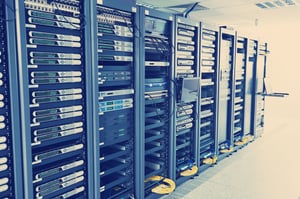
The carbon footprint of data comes from the physical systems that store, process and transmit business information. Cloud platforms may feel remote from daily operations, but they rely on data centres, electricity, cooling equipment and manufactured hardware. For organisations that depend on hosted applications, remote backups or artificial intelligence, these emissions belong in the wider carbon strategy.
This is increasingly relevant in the UK. The Office for National Statistics reports that the data centres covered by government statistics used an estimated 4.5 TWh of grid electricity in Great Britain in 2024, equal to 2% of grid electricity consumption. Their use rose by 41% between 2020 and 2024, although the estimate excludes enterprise data centres operated for an organisation’s own use.
Measuring the carbon footprint of cloud computing starts by identifying the services your business uses, the providers involved and the evidence available. The assessment should then separate a provider’s corporate footprint from emissions attributed to your own service, because those figures answer different questions.
| Quick navigation points throughout | |
What Does the Carbon Footprint of Data Include
Data centre emissions include the electricity used by servers, storage equipment and networking hardware, together with energy used for cooling and other supporting systems. The carbon result depends partly on where and when electricity is consumed, the generation mix and the accounting method applied.
A fuller digital carbon footprint also considers emissions from manufacturing equipment and replacing it at the end of its useful life. Depending on the assessment boundary, network transmission and the end-user devices used to access a service may also be relevant. Water use, raw materials and electronic waste are important environmental impacts, although they should not be presented as carbon emissions unless a recognised method converts them into greenhouse gas equivalents.
Carbon footprints express different greenhouse gases as carbon dioxide equivalent, or CO2e. The boundary and calculation method must be stated so that figures can be interpreted correctly and compared on a consistent basis.
Why Moving to the Cloud Does Not Remove Emissions
When servers are located on your premises, their electricity use may appear directly in your energy records. With cloud hosting, the infrastructure is operated elsewhere and its emissions are usually part of the value chain rather than your direct energy account. The environmental impact has moved between organisations; it has not disappeared.
Cloud services can still offer efficiency advantages. Shared infrastructure, higher equipment utilisation and specialist facility management may reduce the energy needed for a given service. However, the outcome varies by workload, provider, data centre, electricity source and the physical alternative being compared. A UK Government study of digital services found that digital options can match or use less electricity than physical alternatives in the cases examined, while stressing the need to assess the full delivery chain.
How Can a Business Measure Its Cloud Carbon Footprint
Begin with an inventory of cloud hosting, software platforms, storage, backup, disaster recovery and other externally managed computing services. Record the supplier, service type, reporting period, usage information and any emissions data supplied. This creates a consistent route for identifying gaps and prioritising material services.
Supplier data needs context, ask whether they cover the provider’s whole organisation, a specific data centre or the service you purchase. Service-level information should explain how energy and emissions are allocated, which scopes are included, and whether embodied emissions from hardware are covered. Without that detail, two figures labelled as a cloud carbon footprint may not be comparable.
Electricity claims also require care. The GHG Protocol Scope 2 Guidance distinguishes location-based results, which use average emissions for a geographic area, from market-based results based on qualifying contractual instruments. When a provider refers to renewable electricity or reports a market-based result, ask which instruments support the claim and whether a location-based figure is also available.
What Should You Ask a Hosting Provider
The most useful questions test the boundary, the quality of the evidence and its relevance to your service. They can be included in supplier reviews and procurement criteria:
- Do you measure your organisational carbon footprint? Ask which scopes, entities and reporting period are included, and whether the assessment has been independently reviewed.
- Can you provide emissions information for our service? Establish whether the figure reflects your usage, a data centre total or the provider’s wider operations, and ask how it was allocated.
- How is the infrastructure powered? Request the location-based and market-based electricity results where applicable, together with evidence for contractual renewable electricity claims.
- Which reduction initiatives are in place? Look for specific changes to energy use, equipment utilisation, procurement or the hardware lifecycle, with a method for monitoring results.
- How do you manage equipment over its life? Ask how hardware is maintained, repaired, reused and treated at end of life, and how embodied emissions are considered.
A provider may not yet hold every item in the preferred format. The response still shows the maturity of its measurement, where estimates are being used and whether better data is expected in the next reporting cycle.
What Does the BlackBox Hosting Example Show
BlackBox Hosting provides UK cloud hosting, backup and disaster recovery services. Its published Carbon Reduction Plan records an organisational footprint of 165 t CO2e for the period from the 1st of November 2023 to 31st of October 2024. BlackBox Hosting has completed its third operational carbon assessment with Tunley Environmental, demonstrating its continued commitment to measuring and understanding its footprint. Its 2024/25 assessment recorded a 6.2% decrease in market-based emissions compared with 2023/24, alongside a 13.6% decrease in carbon intensity ratio relative to operations. Tracking both total emissions and emissions relative to business size helps providers understand changes over time and make more informed decisions about where to focus reduction efforts. BlackBox has also reported independent verification of carbon neutrality under ISO 14068-1:2023 for 2025.
To find out more about BlackBox Hosting's approach, explore its carbon-neutral hosting page.
How Can You Reduce a Digital Carbon Footprint
Use the inventory to find resources that are idle, duplicated or larger than the workload requires. Storage policies can also be reviewed so that data is retained for a defined business, legal or recovery need. Any change should preserve security, resilience and access requirements, with IT owners involved from the start.
Procurement can set expectations for supplier reporting, allocation methods and hardware management. Contract reviews are a suitable point to request updated data and compare it with the previous period. Where primary supplier information is unavailable, document the estimation method and replace estimates when better evidence becomes available.
Sustainability teams can coordinate the accounting method and reporting calendar, while IT teams confirm the operational requirements and procurement teams manage supplier information. This division of ownership helps digital emissions become part of established business processes instead of a separate exercise.
The Bottom Line
The carbon footprint of data is a physical consequence of digital services. Electricity, cooling and manufactured equipment all contribute, even when infrastructure is hosted by another organisation. Measurement is most useful when the boundary, source data and allocation method are clear.
Build an inventory of material services, ask providers for evidence that relates to your usage and review the result alongside cost, resilience and security. This creates an implementable basis for reducing waste, improving supplier engagement and tracking progress as digital demand changes.
Tunley Environmental helps organisations measure operational and value chain emissions through Business Carbon Assessments. Our scientists can help define an appropriate boundary, interpret supplier evidence and develop reduction initiatives that fit existing business processes.
Understand the Carbon Impact of Your Digital Services
Cloud hosting is one part of your organisation's wider carbon footprint. Tunley Environmental's scientists can help you assess operations and value chain emissions, interpret supplier data and identify practical opportunities to reduce your impact.