

Science-based expertise

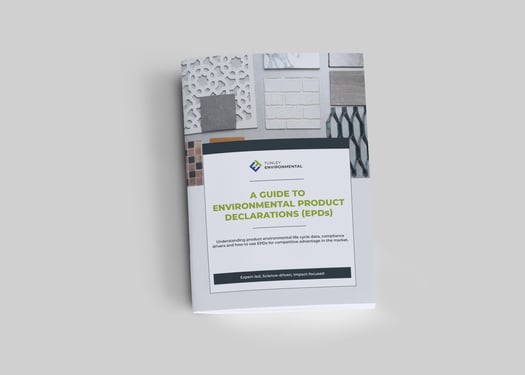
More than 9,000 Environmental Product Declarations (EPDs) were published in 2025, according to the International EPD system. These spanned various sectors, product lines and geographical regions, reflecting the growing demand for transparent and verifiable environmental data for products. In various sectors, EPDs represent the most credible way of demonstrating product-level environmental performance in a regulatory environment that now prioritises transparency, comparability and accountability. Having a detailed guide to environmental product declarations can help stakeholders and investors better understand the role they play in compliance, procurement and competitive advantage positioning for a business.
What Are Environmental Product Declarations?
An Environmental Product Declaration is a standardised, third-party verified document that communicates the environmental impacts of a product across defined stages of its life cycle. These impacts are quantified using Life Cycle Assessment (LCA) methodology and reported in a transparent, comparable format. EPDs are not marketing brochures, eco-labels or performance ratings. They do not declare a product to be “good” or “bad”. Instead, they provide objective, evidence-based data that allows the user to make an informed comparison between products that perform the same function.
A typical environmental product declaration includes:
-
A clear product description and functional unit
-
Defined life cycle stages, such as cradle-to-gate or cradle-to-grave
-
Quantified environmental impacts, including carbon emissions
-
Methodological assumptions, data sources and system boundaries
-
Independent third-party verification details
This transparency is what differentiates EPDs from self-declared environmental claims and makes them suitable for regulatory, procurement and design decision-making.
Learn more: What is an EPD?
Standards That Govern Environmental Product Declarations
The credibility of EPDs depends on strict adherence to internationally recognised standards. These standards ensure consistency in how impacts are calculated, reported and verified.
The most relevant standards include:
-
ISO 14025, which defines Type III environmental declarations
-
EN 15804, the core European standard for construction product EPDs
EN 15804 is particularly influential, as it establishes mandatory impact categories, system boundaries and reporting rules. The introduction of the EN 15804+A2 amendment has further increased rigour, particularly around carbon reporting and data transparency. Compliance with these standards is a core component of environmental product declaration certification and supports trust in EPD data across supply chains.
Learn more: Leveraging EPDs for Sustainable Construction
How to Properly Read an Environmental Product Declaration
One of the most common challenges professionals face is knowing how to properly read and apply EPD data. While EPDs are highly technical documents, certain sections are particularly important for non-specialist users.
-
The functional unit is the starting point. This defines the quantified reference for all impacts reported, such as one cubic metre of concrete or one square metre of flooring. Comparisons are only meaningful if functional units are equivalent.
-
The declared scope then clarifies which life cycle stages are included. A cradle-to-gate EPD cannot be directly compared with a cradle-to-grave EPD without further analysis.
-
Environmental impact indicators follow, with global warming potential typically receiving the most attention. However, other indicators, such as resource depletion and eutrophication, may be equally relevant depending on the application.
-
Finally, verification details confirm that the EPD has been independently reviewed. This verification is essential for credibility and compliance, particularly in regulated or public procurement contexts.
Developing confidence in understanding EPDs will help organisations to move beyond surface-level use and integrate EPD data into meaningful sustainability decisions.
Learn more: How to Read an EPD
Learn more: Practical Ways to Apply an Environmental Product Declaration
EPD Certificates and Programme Operators
Once verified, environmental product declarations are published through recognised programme operators. These organisations manage EPD rules, verification processes and public registries.
Examples include:
-
The International EPD System (Example of one Tunley has completed)
-
BRE Global
-
Institut Bauen und Umwelt (IBU)
-
EPD Hub (Example of one Tunley has completed)
EPD certificates confirm that the declaration meets all methodological and verification requirements. For specifiers and procurement teams, this provides assurance that environmental data has been independently scrutinised rather than self-declared. Environmental Product Declaration certification essentially plays a critical role in building trust across complex, multi-tier supply chains.
The Benefits of Environmental Product Declarations in Practice
When used strategically, EPDs deliver value across commercial, operational and sustainability objectives.
- They support market access by meeting green building and procurement requirements, improve credibility by replacing generic claims with verified data, enabling better design decisions through accurate whole life carbon modelling.
- Internally, EPD development often reveals carbon and resource hotspots within manufacturing processes, providing a foundation for targeted efficiency improvements. Externally, EPDs strengthen relationships with clients, designers and regulators by demonstrating transparency and accountability.
Learn More: Benefits of Environmental Product Declarations
As EPD standards evolve, many organisations seek specialist Environmental Product Declaration Consulting to support development, verification and integration. Consulting support can help ensure methodological compliance, improve data quality, interpret results and align EPDs with wider sustainability goals such as net zero targets or corporate reporting requirements. This approach reduces risk, saves time and ensures that EPDs deliver long-term value rather than becoming static compliance documents.
The Bottom Line
The role of EPDs is set to expand further. Digital EPDs, tighter carbon benchmarks and greater regulatory scrutiny are all shaping the future landscape. This guide to environmental product declarations shows that EPDs shouldn’t simply be seen as required technical disclosures, but strategic tools that enable better decisions across the value chain. When developed and used correctly, they support regulatory compliance, commercial differentiation and genuine environmental improvement.